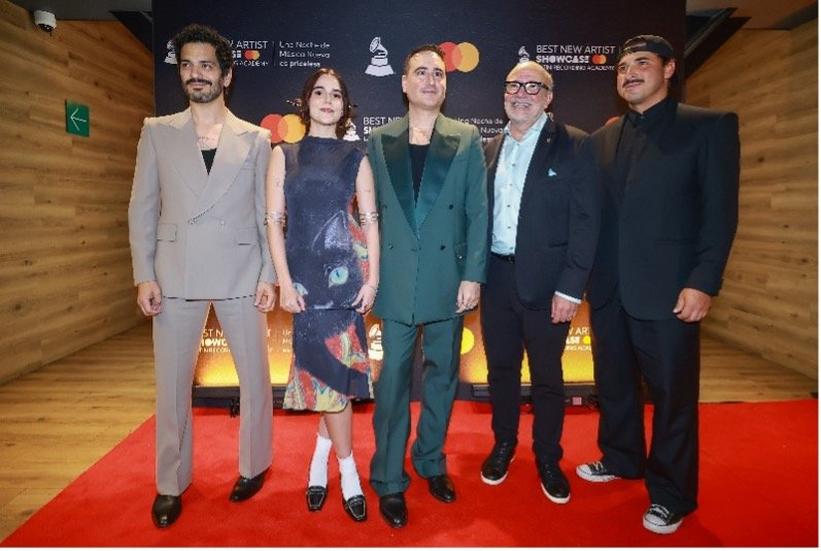
The 2026 Prodigy Scholarship was awarded by Noel Schajris
Additional scholarships awarded include two Frost School of Music-Latin GRAMMY Cultural Foundation Scholarships, the Berklee & Latin GRAMMY Cultural Foundation Emerging Talent Scholarship, the Celia Cruz Legacy Scholarship, the Kany García Scholarship, the Manolo Díaz Scholarship, and several Tuition Assistance Scholarships
MIAMI (AUGUST 5, 2026) — Today, the Latin GRAMMY Cultural Foundation® awarded more than $1.7 million in scholarships to music students in need from around the world. Scholarships ranged from four-year commitments towards a bachelor’s degree, to gifts that aid tuition costs, and all incorporate pathway services that include mentorship, learning labs and educational experiences.
“Every scholarship we award represents an investment in the future of Latin music and in the extraordinary talent of the next generation of creators. We are proud to help remove financial barriers so these students can pursue their education, develop their artistry and build lasting careers in music. None of this would be possible without the generosity of our donors and partners, whose commitment continues to create life-changing opportunities for young musicians across the United States and Ibero-America,” said Raquel "Rocky" Egusquiza, Executive Director of the Latin GRAMMY Cultural Foundation.
Awarded scholarships include the 2026 Noel Schajris Scholarship, also known as the Prodigy Scholarship, the Frost School of Music-Latin GRAMMY Cultural Foundation Scholarships, the Berklee & Latin GRAMMY Cultural Foundation Emerging Talent Scholarship, the Celia Cruz Legacy Scholarship, the Kany García Scholarship, the Manolo Díaz Scholarship, and several Tuition Assistance Scholarships.
The 2026 Noel Schajris Scholarship was awarded to Puerto Rican violinist Razil Rosado Figueroa. The four-year scholarship—sponsored by Latin GRAMMY® winner and GRAMMY®-nominated singer/songwriter Noel Schajris— is valued at up to $250,000 and covers tuition costs towards a bachelor’s degree at Berklee College of Music beginning with the fall semester of 2026.
“Passion for music can’t be taught. The gift of feeling — and making others feel — through an instrument or a voice is something you’re born with, or you’re not. Why that happens is a beautiful mystery, though many suspect it has a divine origin. Some call it a gift from God; others, an agreement with your higher self. Whatever its source, when it happens, it’s undeniable. And it’s precisely that connection that makes art, in all its forms, so important... so essential to the human experience. It’s the honor of my life to help Razil expand his divine gift and unshakeable spirit as a 17-year-old with unmatched passion, simply by giving him more tools and opportunities to walk that path, with the help of my beloved Latin GRAMMY Cultural Foundation family and a place as wonderful as Berklee College of Music. My hope is that this new chapter enriches his journey even further and lets him build a life full of music that lifts us all. My wish is that the music that resonates from within you always serves the soul, the light, and love,” said Schajris.
The Foundation also awarded two Frost School of Music-Latin GRAMMY Cultural Foundation Scholarships to Miami-based vocalists Lea Garza and Melissa Cruz, for a combined total of $525,000, that cover tuition and pathways services related to their studies in pursuit of bachelor’s degrees at the Frost School of Music at the University of Miami.
“The Frost School of Music is proud to once again partner with the Latin GRAMMY Cultural Foundation to award scholarships to deserving students in an even bigger way this year,” said Serona Elton, Interim Vice Dean at the Frost School of Music at the University of Miami. “We’re glad to offer these two talented artists a remarkable, multidisciplinary education where they can study with world-renowned faculty, gain extensive performance experience, and earn a degree at a top music school in the heart of Miami, a hub for Latin music.”
Additionally, for the second consecutive year, the Foundation awarded the Berklee & Latin GRAMMY Cultural Foundation Emerging Talent Scholarship to bassist Anahí Solano. This full tuition Presidential scholarship is valued at $275,000, and covers tuition, comprehensive fees, required laptop fee/software bundle and on-campus housing.
“We are so proud of our 11-year partnership with the Latin GRAMMY Cultural Foundation. This is the second year that Berklee has matched the Prodigy Scholarship with a Presidential level scholarship. Anahí is such an exceptional candidate, and I look forward to welcoming her in person to Berklee and Boston in just a few weeks. Berklee is built by musicians, for musicians. The partnership with the Foundation has generated millions of dollars to support Berklee students over the years. We have every confidence that these candidates will flourish at Berklee and go on to successful careers in the music industry,” said Damien S. Bracken, Dean of Admissions at Berklee College of Music.
The Foundation also announced the recipients of its Gifted Tuition Scholarships and Tuition Assistance Scholarships which allow students from diverse backgrounds to receive the opportunity to pursue an education at some of the most prestigious music institutions in the world.
Three (3) Gifted Tuition Scholarships, valued at up to $120,000, were awarded to students pursuing a four-year bachelor's degree at the institution of their choice:
The Celia Cruz Legacy Scholarship was awarded to saxophonist Franco Dilmé Romero. This scholarship was sponsored by The Celia Cruz Foundation and other donors.
The Kany García Scholarship was awarded to clarinetist Gabriela Farinas, sponsored by muti-Latin GRAMMY® winner and 2022 Leading Ladies of Entertainment honoree, Kany García.
The Manolo Díaz Scholarship, in honor of one of the founding members of the Foundation and current Board member, was awarded to bassist David Amparo. The scholarship was funded by fellow Board member Mireya Cisneros in recognition of Diaz’ contributions and legacy within the industry.
In addition, with support from AIE Sociedad de Artistas, Amazon Music, Bulova, Gibson Gives, and bands including Latin GRAMMY®-nominated Fuerza Regida, and Latin GRAMMY®-winning Banda Los Recoditos, the Foundation awarded several Tuition Assistance Scholarships. These one-time awards, ranging from $10,000 to $12,500, help cover costs at the college or university of each recipient's choice. Throughout the year, Open Society Foundations has provided general support across all Foundation programing.
All scholarship recipients will be celebrated at a heartfelt private event with a reception hosted by the Frost School of Music at the University of Miami, made possible with the support of the Frost School of Music, BMI, First Horizon and Hachar Law.
Since its establishment in 2014, the Latin GRAMMY Cultural Foundation has committed more than $17 million in scholarships, grants, musical instruments and educational programs reaching around 9 million of students throughout the United States and Ibero-America.
To view all scholarships awarded and their respective recipients, please visit latingrammyculturalfoundation.org.
###
ABOUT THE LATIN GRAMMY CULTURAL FOUNDATION:
The Latin GRAMMY Cultural Foundation® is a 501(c)(3) charitable organization established by The Latin Recording Academy® with the vision of becoming a global champion of music education and empowering communities through Latin music and culture. In 2024, the Foundation celebrated its 10-year anniversary, and during the last decade, it has fostered the next generation of Latin music creators through scholarships, education programs and grants that advance Latin music and celebrate its rich cultural heritage. To date, the Foundation has donated more than $15 million with the support of The Latin Recording Academy’s members, artists, corporate sponsors and other generous donors. For additional information or to donate, please visit latingrammyculturalfoundation.org or our Facebook page. And follow us @latingrammyfdn on Instagram, and at Latin GRAMMY Cultural Foundation on Facebook and LinkedIn.
MEDIA CONTACT:
The Latin Recording Academy
Nathalie Alberto
Nathalie.Alberto@grammy.com
.jpg?w=821&sm=c)